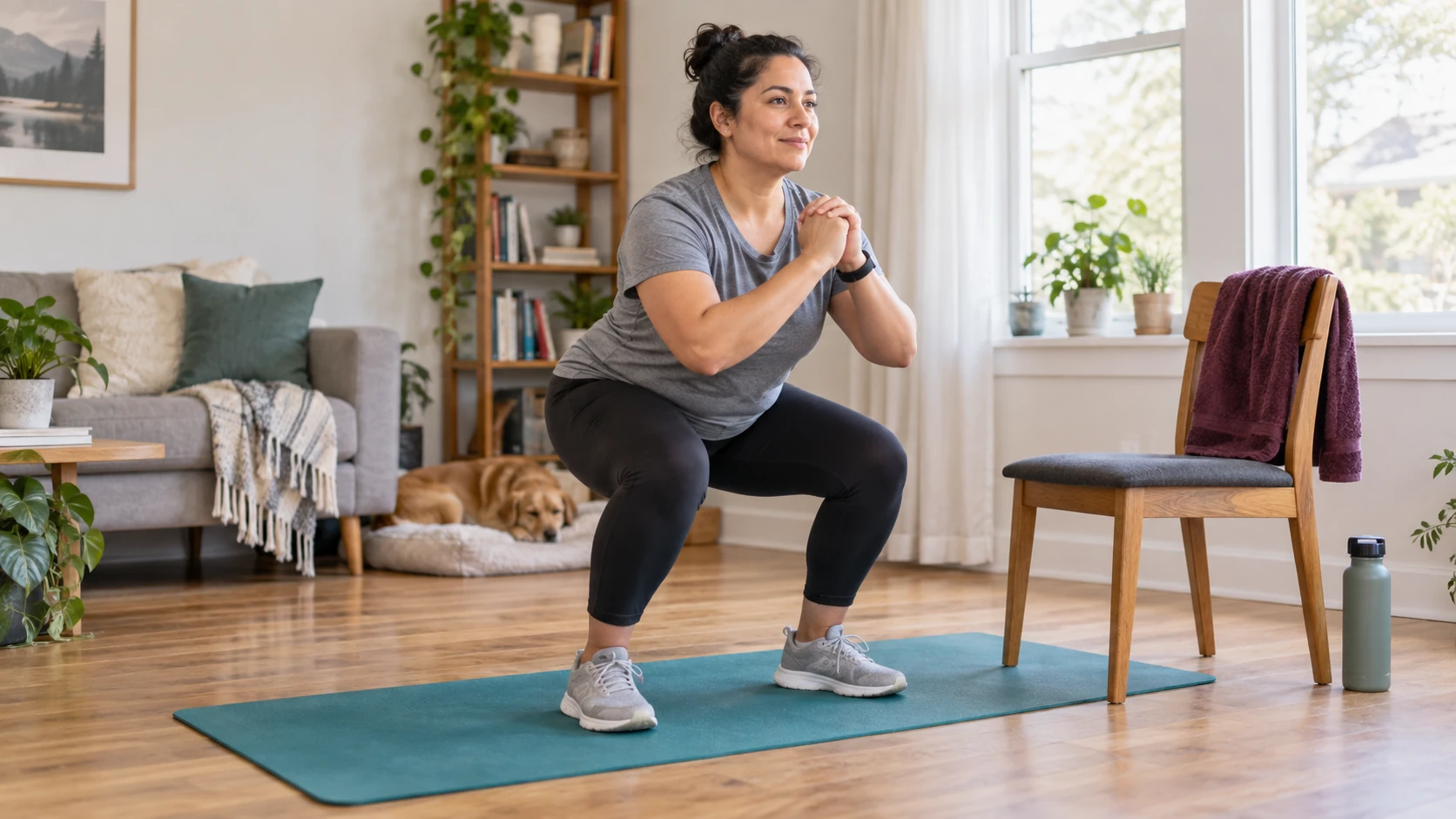
Make the next session practical
Start by deciding when movement can happen and what would make the session easy to begin. Put comfortable clothes by the door, choose a route with a safe surface and set a stopping point before you start. These small decisions remove friction and make the plan less dependent on motivation. If a session is missed, resume at the next sensible opportunity instead of trying to compensate with an exhausting workout.
Strength work can be introduced without turning every visit into a test. Learn a few basic movements, keep the range comfortable and write down what you did. Progress might mean another controlled repetition, a slightly longer walk between sets or better confidence with the equipment. Rest days are part of the programme because muscles, joints and attention all need time to recover.
Food and body composition deserve the same measured approach. Eat regularly, include a variety of foods and be cautious about plans that promise a fixed result in a fixed number of days. A qualified professional can help with individual nutrition or medical questions. The purpose of this guide is to support a repeatable routine, not to diagnose, prescribe or judge a body.
Questions to ask before you begin
Measure progress without rushing it
A useful early measure is consistency: completing the planned warm-up, keeping the movement controlled and finishing with enough energy to recover normally. For help with the planning side, see our guide to making an activity habit easier to repeat. Strength, repetitions or load can follow later. Recording one or two simple details after a session makes progress visible without turning every workout into a test.
Recovery is part of the plan. Sleep, regular meals and rest between demanding sessions support the next effort. Persistent pain, dizziness or symptoms that feel unusual are reasons to stop and seek appropriate advice, not obstacles to push through.
How often should a beginner train?
Choose a frequency you can repeat, leave recovery between demanding sessions and adjust it when work, sleep or health changes.
Do I need a gym to build strength?
No. Bodyweight, bands and everyday movement can be useful. Ask a qualified coach how to progress safely with the equipment you have.
What if I miss a planned workout?
Continue with the next manageable session. Avoid doubling the workload to make up for one missed day.
When should I ask for professional advice?
Ask a clinician or qualified exercise professional about persistent pain, concerning symptoms, a health condition or a return after illness.
Start with a routine you can repeat
Busy schedules can make movement feel optional. Choose a form of activity that fits your current ability and your week, then make the first target small enough to repeat. A walk, an easy cycle, a short swim or an introductory gym session can all be useful starting points.
The earlier version of this article pointed readers towards reporting by The New York Times when discussing outdoor activity. That reference is preserved, but no single article replaces advice tailored to your health and circumstances.
Use the gym with a plan
A gym can help people train different movement patterns and progress gradually. Ask staff how equipment works, use loads you can control and allow recovery time. If you are new to resistance exercise, an induction or qualified coach can help you begin safely.
Nutrition matters too, but dramatic restrictions are difficult to sustain. The Harvard T.H. Chan School of Public Health and the International Society Of Sports Nutrition were among the inherited source references used by the old publication. Readers also encountered research material via Research Gate, another source cited by the old publication. Check the quality and date of any specific claim instead of relying on a publisher name alone.
Measure consistency, not perfection
Review how the routine feels after several weeks. A plan that supports sleep, energy and regular attendance is more useful than one that produces a brief burst of effort followed by a long break.